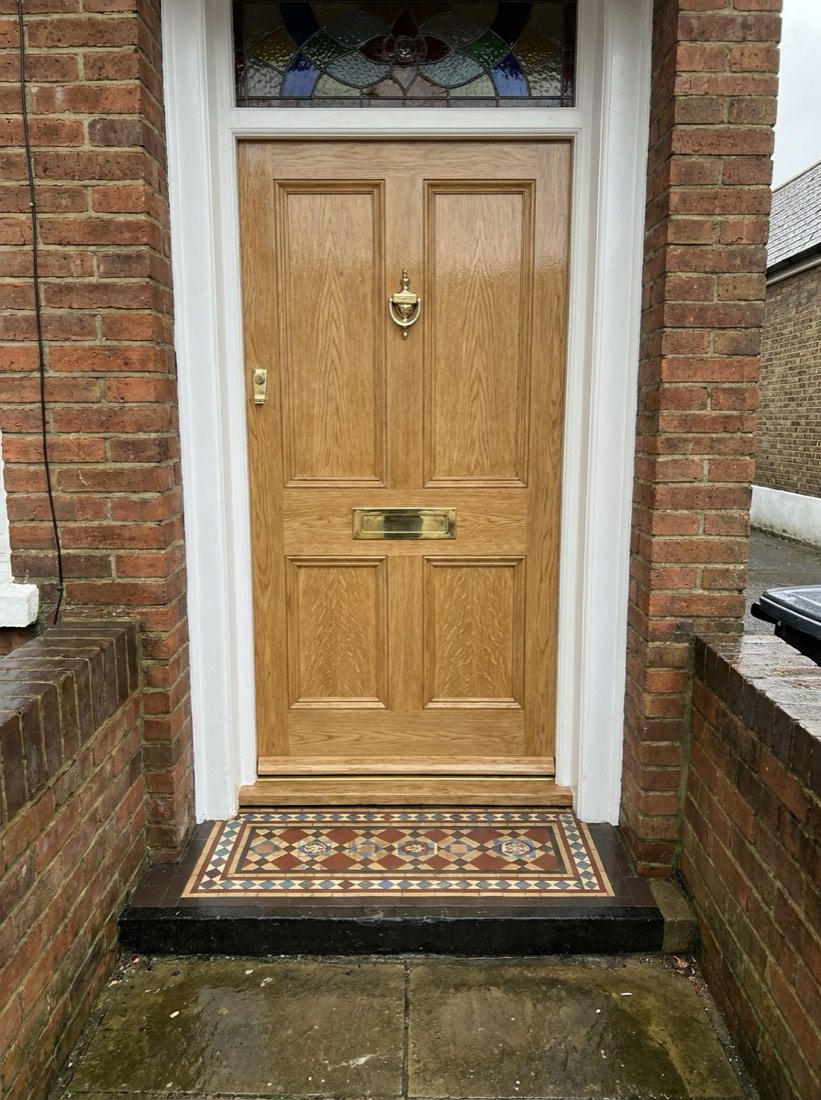
When graining is the right choice
- Matching a replacement door or new joinery to original grained woodwork
- Restoring the grained front doors and internal doors common in Victorian and Edwardian houses
- Giving MDF, softwood or metal doors the look of a hardwood
- Panelling, skirting and staircase parts where real hardwood would cost too much
How it's done
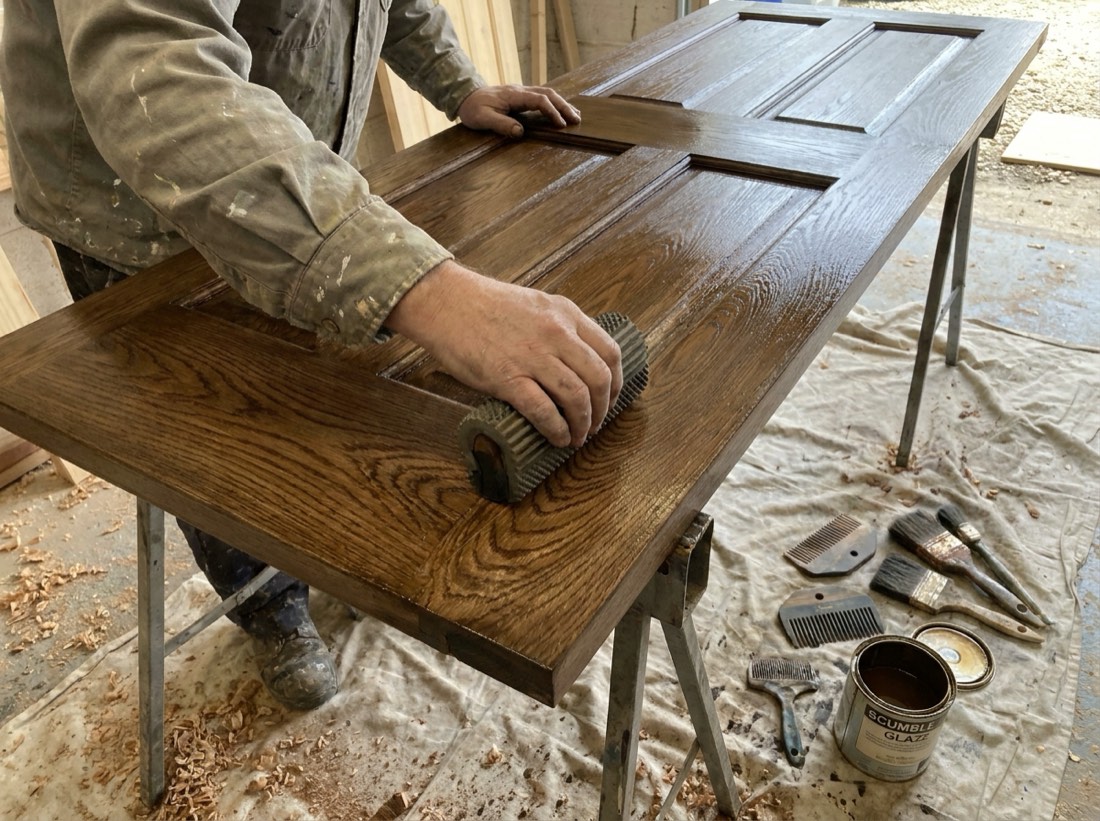
Graining starts with a base coat in the lightest colour of the timber. Over that goes a coloured glaze or scumble, which I work while it's wet with combs, brushes, rags and rubber graining tools to draw the grain, the knots and, for oak, the silvery ray figure. Once dry, more glazes can be added for depth, then it's varnished. Done well, it fools people from a few feet away.
Timbers I can paint
Oak, both light and dark, is the most common. I also grain mahogany, walnut, pine and maple. If you're matching existing woodwork, I'll mix the colours to suit it.
Film-set experience
On a film set, new timber often has to look a hundred years old by the next morning. I did that kind of work for 25 years on productions including Casino Royale, Skyfall, Batman and Wonder Woman. Read more about my background.
Restoring existing graining
Many older houses still have original grained doors and panelling, often worn on the edges, or partly painted over. Rather than stripping it all off, I can clean it, touch in the worn areas to match the surrounding grain, and re-varnish. It keeps the original character, and it usually costs less than starting again.
Painted doors and cupboards
Graining also works on front doors and kitchen cupboards, if you want the warmth of wood without replacing them.