What I hang
- Lining paper, to hide uneven plaster before painting or papering
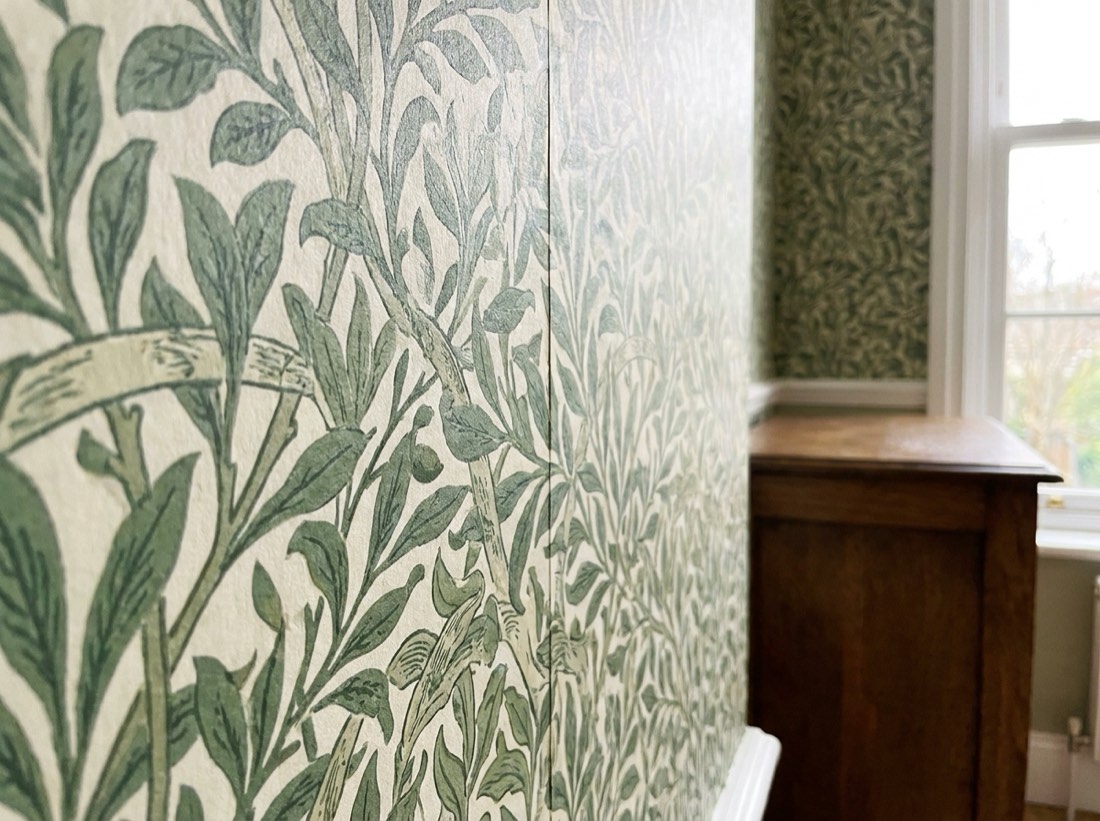
- Patterned papers, with the pattern matched across every seam and around doors and windows
- Designer and hand-printed papers, which often need extra care with paste and handling
- Paste-the-wall, non-woven and vinyl papers
- Large murals that come in numbered panels
- Feature walls, chimney breasts and alcoves
Getting the wall right
Wallpaper shows every lump in the wall beneath it. I strip old paper, fill and sand, and size or prime the wall so the paste grips evenly. On poor plaster, a layer of lining paper first gives a far better result than hanging an expensive paper straight onto it.
Ordering the right amount
Patterned papers with a large repeat use more rolls than plain ones, because of the waste when matching. Before you order, I can measure up and tell you how many rolls you need, so you don't end up short or with rolls from different batches. Rolls from different batches can differ slightly in colour, so check the batch number is the same on every roll.
Stripping old wallpaper
Stripping is often the slowest part of a wallpaper job, especially where old paper has been painted over. I use a steamer and take care not to damage the plaster underneath, then make good any patches before the new paper goes up.
Wallpaper or paint?
Paint is quicker and cheaper to change later, and suits rooms that get steam and knocks, like kitchens and bathrooms. Wallpaper adds pattern and texture that paint can't, hides minor imperfections in the wall better, and lasts well in bedrooms, living rooms and hallways. A common middle ground is papering a single feature wall or chimney breast and painting the rest of the room in a colour picked from the paper.