What's included
- Walls and ceilings, in emulsion or specialist paints such as chalky or clay-based finishes
- Skirting boards, architraves, doors, door frames and window frames
- Stairs, spindles and handrails (see doors and staircases)
- Filling cracks and holes, sanding, and stain blocking over water marks and smoke staining
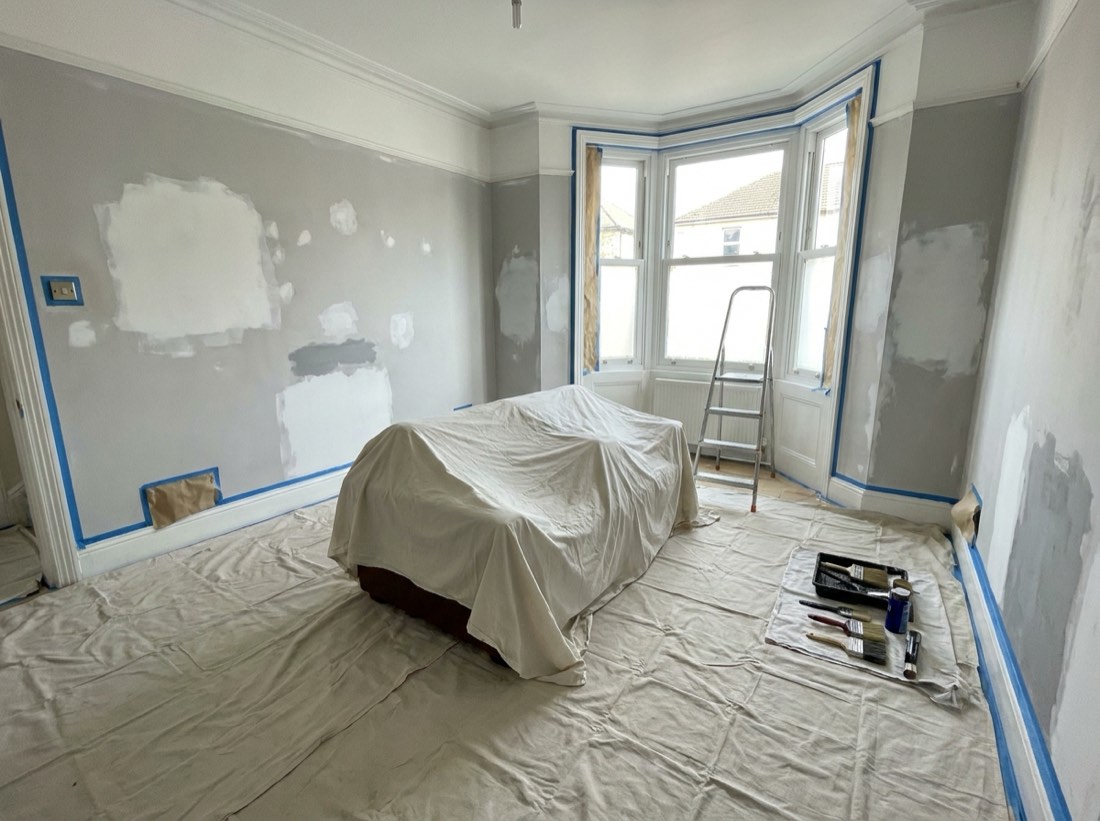
- Moving and covering furniture, and protecting floors with dust sheets
Preparation first
New paint shows every crack, dent and patch underneath it, especially in raking light from a window. Before I open a tin of colour, I fill and sand the walls, caulk gaps around skirting and frames, and spot-prime repairs so they don't show through as dull patches. Water stains and nicotine get a stain-blocking primer, because emulsion alone will let them bleed back.
Older houses
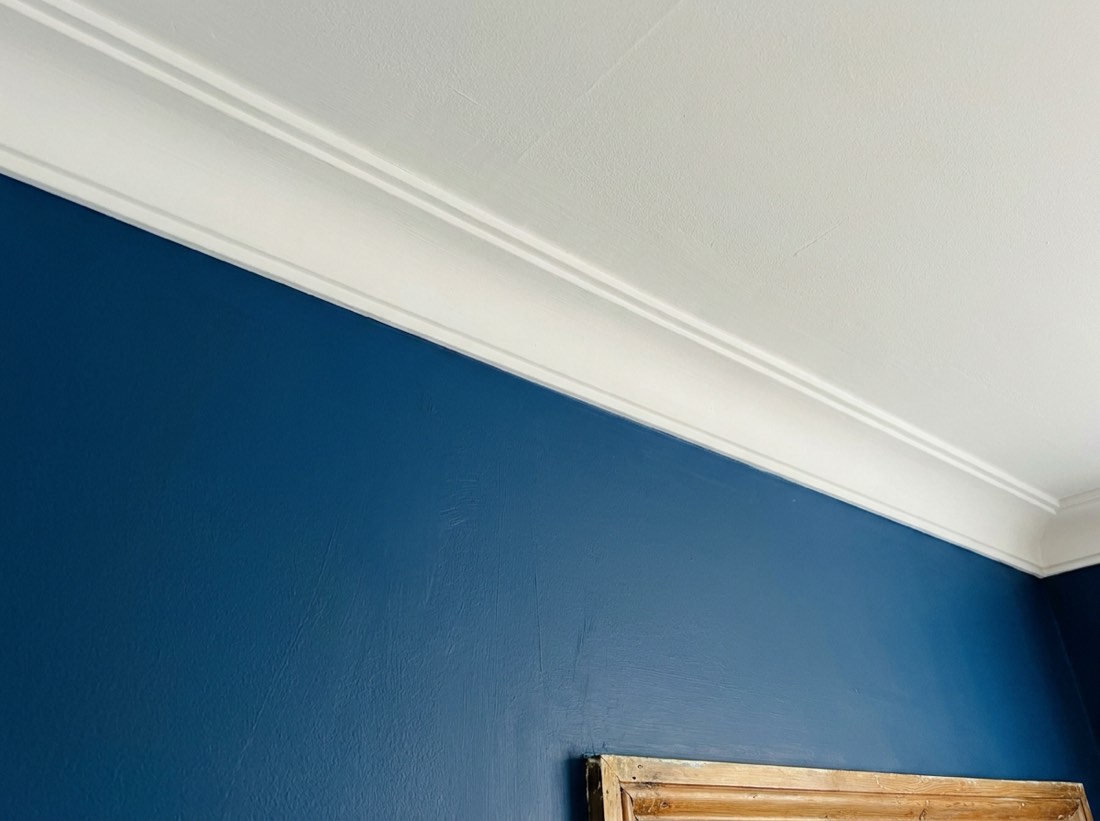
A lot of Hertfordshire's housing is Georgian, Victorian or Edwardian, with lime plaster, original cornicing and wooden sash windows. Old lime plaster needs breathable paint, not a modern vinyl emulsion that traps moisture, and cornicing clogged with decades of paint can be cleaned back before repainting. I've spent years making new sets look old, so I know how period surfaces should look when they're finished.
Living in the house while I work
Most people stay at home while I decorate. I work room by room where I can, keep the rooms I'm not working in clear, and clean up at the end of each day so you're not living in a building site.
Shops, offices and other businesses
I take on commercial work as well as homes: shops, offices, salons, restaurants and rental properties. Tell me your opening hours and we'll work out the best time to do it, so the work gets in your way as little as possible.
Specialist finishes
If you want something more than flat colour, I also do faux marbling, wood graining and other decorative paint effects.