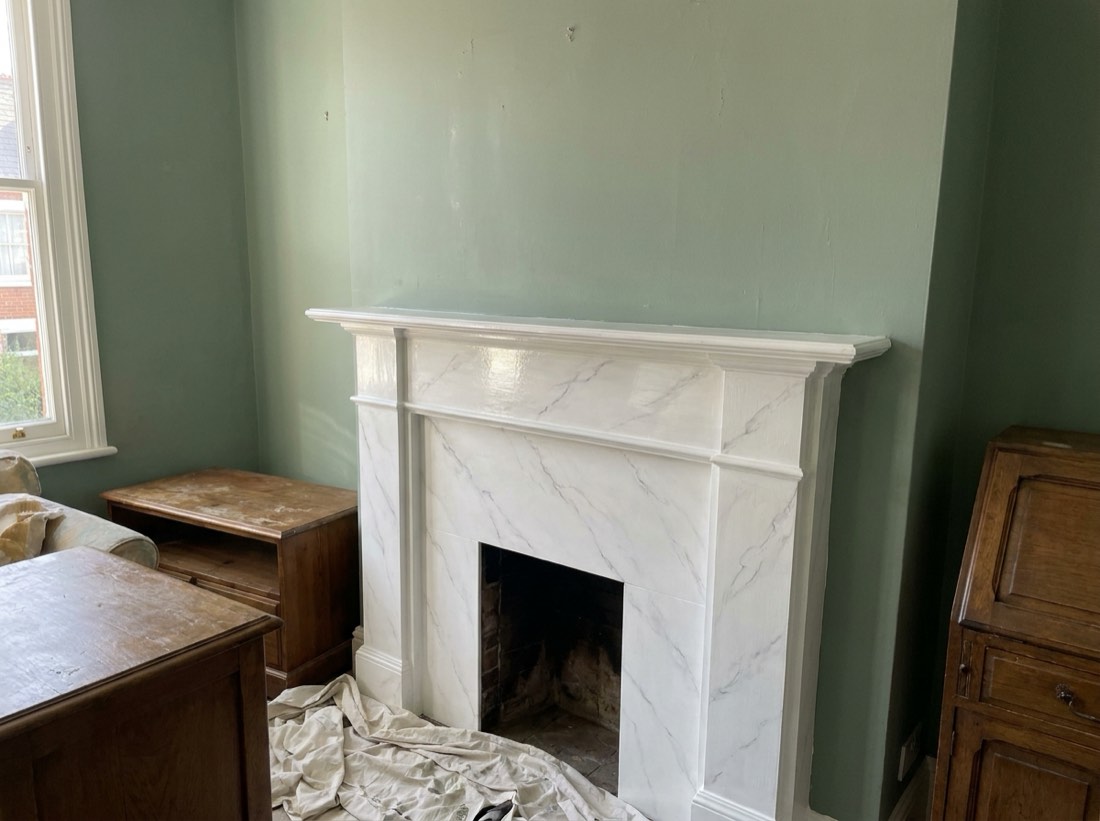
Where faux marble works
- Fire surrounds and mantelpieces
- Columns, pilasters and archways
- Skirting boards and dado panels in hallways
- Bathroom panelling and bath side panels
- Furniture, table tops and decorative pieces
How it's done
Real marble gets its look from layers of mineral deposits, and painted marble copies that in layers too. I start with a base coat in the stone's ground colour, then build up thin, translucent glazes, softening them with brushes and feathers so they look deep rather than flat. The veins go on last, varied in width and direction the way they run through real stone. A protective varnish seals the finish.
Which marbles can be copied?
White Carrara with soft grey veining is the most requested, but I can also paint darker and more dramatic stones such as black and gold Portoro, green Verde Antico, and the warm Siena marbles. If you have a piece of real marble you want matched, show it to me.
Where I learned it
I spent 25 years painting sets for major films, where plaster and timber are painted to look like stone that has to pass on a cinema screen. Marbling and graining were everyday work. You can read more on my about page.
Is it hard-wearing?
Once it's varnished, painted marble on a fire surround, panel or skirting holds up well to normal household use. On surfaces that get heavy wear, such as a table top, I'll use a tougher varnish and tell you how to look after it.
Restoring old marbling
Many Victorian and Edwardian houses had marbled fire surrounds and skirting that have since been painted over or worn through. Where the original survives in places, I can match the colours and veining and patch the damaged areas so the repair doesn't show. Where it's gone completely, I can recreate it in a style that suits the age of the house.